
Sometimes, Silent Encounters Bring Us Back to What Matters
Sometimes, silent encounters bring us back to what truly matters.
Mine happened in front of a tree, in the Singapore Botanic Gardens — a tree with which, for the first time, I entered into an inner dialogue.
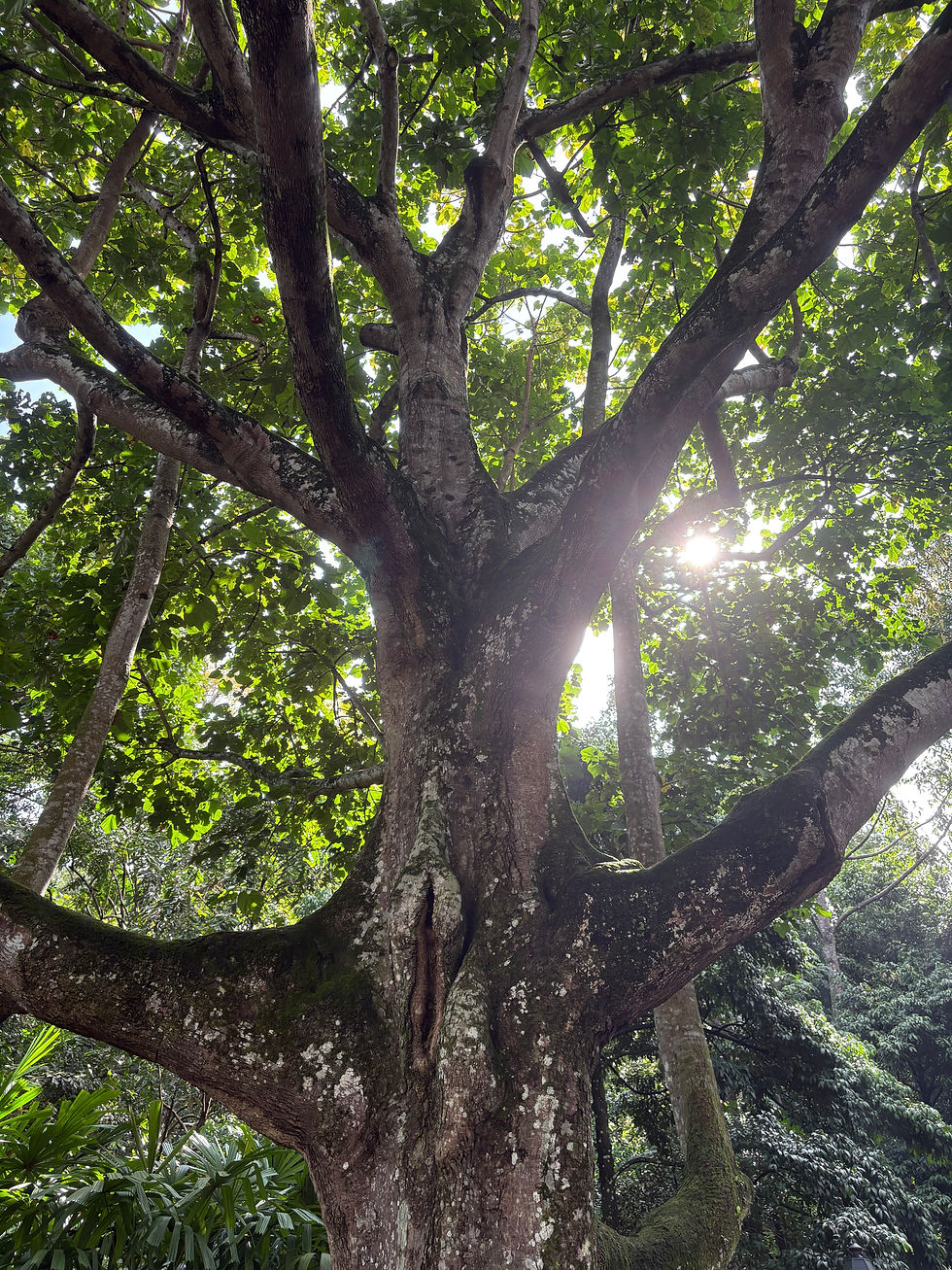
In its presence, something shifted: I reconnected with myself.
This majestic tree, deeply rooted, bears a wide fissure that it has managed to contain so it could continue growing. Its wound did not stop it; it is simply part of its story.
Nature reminds us that imperfection does not prevent movement. That some things never return to the way they were — and that it is precisely through welcoming loss, failure, or rupture that life finds another way forward.
We often try to control the forest of our psyche, the one that leads us into the labyrinth of our endless interpretations. The more we seek control and reassurance, the further we may drift from ourselves.
This tree, though immobile, conveys a simple message to me: we can spread without fleeing, simply by remaining faithful to ourselves.
One Tree, One Story
This tree is majestic and powerfully rooted.
To move, to travel, to escape — all of that is impossible for it. And yet, it radiates.
It invites me into gratitude: for who I am today, and for who I am becoming.
Returning to oneself means feeling a full presence toward oneself — a presence that, little by little, makes us less dependent on the gaze of others.
The story of this tree is closely tied to its origins. During an official visit to Singapore in March 1997, it was dedicated to Nelson Mandela.
The choice was not accidental:
• the tree comes from Africa;
• it symbolizes the connection between continents and openness to the world;
• it evokes migration and adaptation;
• it reminds us that life can flourish far from its origin while still keeping its identity.
The Tree Itself
• Species: Cola gigantea (family Malvaceae).
• Origin: the tropical forests of West Africa.
• Size: a large tropical tree capable of becoming very imposing; the one in the garden already has a massive trunk.
• Cultural connection: its cousin, Cola nitida, is historically linked to the origin of cola beverages.
It is not a spectacular tree; its strength lies in its simplicity.
Sometimes you have to stop, slow down, read the plaque — and this simple gesture creates an intimate pause, almost an invitation to reflection in the middle of the garden.
The Fissure
This visible wound did not prevent it from continuing to grow and unfold. It embodies patience, dignity, and continuity.
In this year 2026, in a world where performance often dominates, this tree conveys an essential message to me: reconnecting with my inner child. Like it, we grow by moving through trials. We may be uprooted from familiar ground and yet continue evolving if we remain in relationship with ourselves.
Its scar also tells another story: returning to oneself is not about displaying one’s wounds, but about daring to meet them. It means accepting a dialogue with our wholeness.
The scar becomes a living memory — a place from which life can continue.
And perhaps that is what returning to oneself truly means: recognizing that our fissures are not endings, but passages.


Comments